

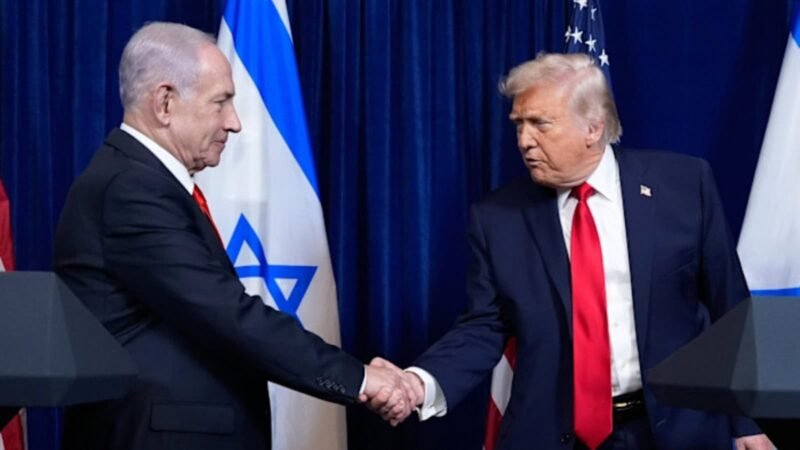

Israeli Prime Minister Benjamin Netanyahu has reportedly been calling US President Donald Trump every day to urge him to resume military operations against Iran, despite diplomatic efforts to prevent a fresh escalation in the Middle East.
A person briefed on the discussions told the Financial Times on Tuesday, November 10, that Netanyahu had been pressing Trump to restart the conflict.
“Netanyahu calls him every day [to urge him to resume the war],” the source said, adding that those opposed to renewed fighting within and outside the White House were attempting to counter the Israeli prime minister’s appeals.
“The regional leaders are telling him (Trump) not to escalate and prioritise negotiations,” the person added.
Another source familiar with the situation in Israel said Netanyahu favoured resuming military action but indicated that there was no coordinated campaign to persuade Trump to launch another offensive.
Gulf leaders oppose renewed military escalation
Netanyahu’s reported appeals come as regional leaders intensify efforts to prevent the conflict from escalating.
According to the Financial Times, UAE President Sheikh Mohamed bin Zayed Al Nahyan, Saudi Crown Prince Mohammed bin Salman, Qatar’s Emir Sheikh Tamim bin Hamad Al Thani and Turkish President Recep Tayyip Erdogan have urged Trump to pursue a diplomatic solution.
Their concerns centre on the possibility that renewed US attacks could provoke Iranian retaliation against Gulf countries and strategic infrastructure.
Trump referred to the position of regional allies following his meeting with Qatari Prime Minister Mohammed bin Abdulrahman Al Thani on Monday, November 9.
In a post on Truth Social, he said Qatar, Saudi Arabia, the UAE, Bahrain, Kuwait and other countries preferred maintaining the status quo, which he described as continuing the US naval blockade of Iran alongside a new operation, Iron Gate, covering land and sea.
He also said the countries agreed that Iran must not acquire nuclear weapons, describing this as non-negotiable.
Trump said Washington remained prepared to respond to developments in the Middle East, declaring that the US was “locked and loaded”. However, he considered renewed military action unlikely at this stage, citing positive momentum towards ending the conflict.

Military activity continues amid diplomatic efforts
Despite the push for negotiations, reports of American military operations against Iranian targets have continued. Qeshm Island was reportedly struck by US missiles on November 3 and November 6.
Trump did not directly address the November 6 incident but acknowledged a separate operation targeting an Iranian anti-aircraft system.
“We do minor strikes, but they knock out. They built a little bit of an anti-aircraft device, and we knocked it out in about 15 minutes, maybe five,” he told reporters in West Palm Beach, Florida.
Iran has warned that further American attacks would trigger retaliation, adding to regional fears over the security of critical infrastructure, including undersea communications cables and data centres.
Disagreements hold up US-Iran negotiations
Mediators are attempting to bridge differences between Washington and Tehran over an interim arrangement based on a seven-day proposal submitted by Iran in September.
Under the reported proposal, Iran would allow shipping through the Strait of Hormuz in exchange for the US lifting its blockade on Iranian ports, allowing oil exports and releasing some frozen assets. Negotiations on a broader agreement would follow.
However, disagreements remain over the sequence of these measures and Iran’s highly enriched uranium stockpile.
Al Jazeera reported on Tuesday, that discussions involving the Qatari prime minister, Trump and US Vice President JD Vance had made “good progress”.
An Iranian official quoted by Fars News Agency, however, dismissed reports that Tehran had agreed to reopen the Strait of Hormuz in exchange for $8 billion in frozen assets. The official said any agreement would have to address sanctions, the naval blockade, frozen funds and an end to the conflict.
Trump faces domestic and financial pressures
The dispute over the next phase of the conflict also comes as Trump faces domestic political pressure following significant Republican losses in the US midterm elections. The prolonged war and rising fuel prices have added to concerns over its economic impact.
The US and Israel launched attacks on Iran on February 28. A memorandum of understanding aimed at ending hostilities was reached in July, but fighting subsequently resumed after diplomatic efforts stalled.
Trump has also raised the prospect of recovering the costs of the military campaign from countries that benefited from American protection.
In an interview with CBS News aired on Sunday, November 8, he said Israel and other countries should reimburse Washington for “any and all costs” incurred during the war.
“We’re going to get all that money back,” he said, insisting that the payments would be made in full. He specifically included Israel, arguing that the country would not exist without American military support.
Get the latest updates in Hyderabad City News, Technology, Entertainment, Sports, Politics and Top Stories on WhatsApp & Telegram by subscribing to our channels. You can also download our app for Android and iOS.
Source: The Siasat Daily